Madrid: The expansion of urban gardens and the peripheries
The phenomenon of urban gardens is more recent in Madrid than in other European cities. Their number started to grow after the 2008 crisis and have been since then linked to community movements, representing a form of resistance in front of urban expansion and speculation processes. Most urban gardens in Madrid are managed by cultural associations and residents’ associations, but we can also find several examples of educational gardens which are managed by both schools and parents’ associations. A couple of gardens are directly taken care by the City Hall of Madrid and Complutense University.
There are two main networks of urban gardens in the city of Madrid. One depends on the city council and responds to a more institutionalized initiative that is linked to public support to gardens. The second one is an organic initiative pushed by residents and associations. The latter is present in the whole region of Madrid, not only the capital.
A notable characteristic of urban gardens in the city of Madrid is that they are mainly located in peripheral neighbourhoods, especially in the south and east of the city, in places like Usera, Villaverde or Vallecas. These districts have a strong tradition in developing community projects and have a long history of protests and demands of urban regeneration and improvements.
Urban gardens in Madrid are related to processes of knowledge transmission between generations, migration processes, food production and represent important places for cultural, social and political exchange.
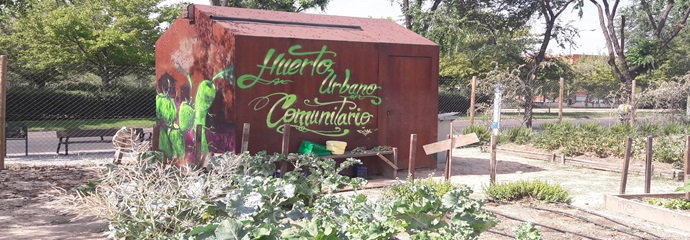 © City Hall of Madrid
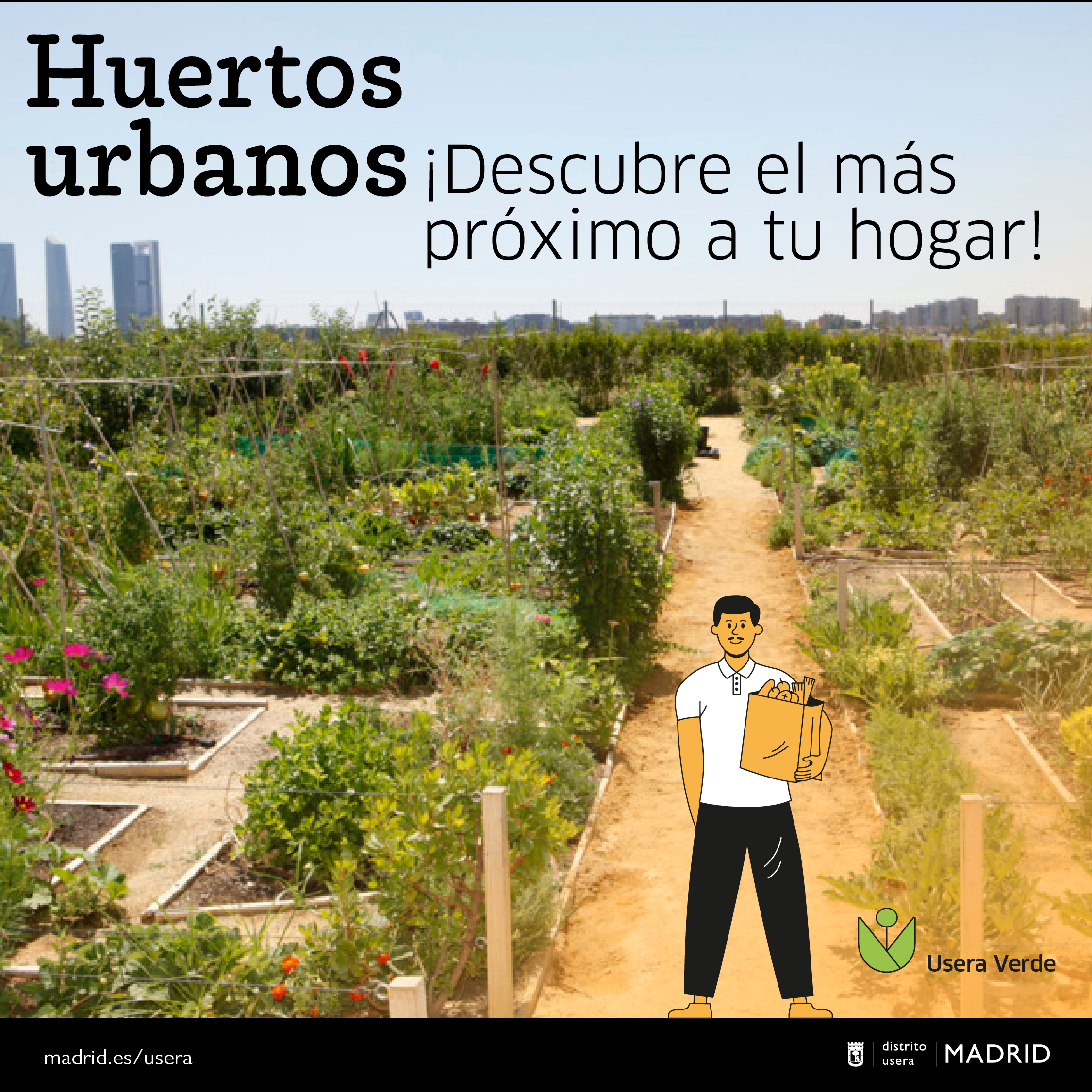 © City Hall of Madrid
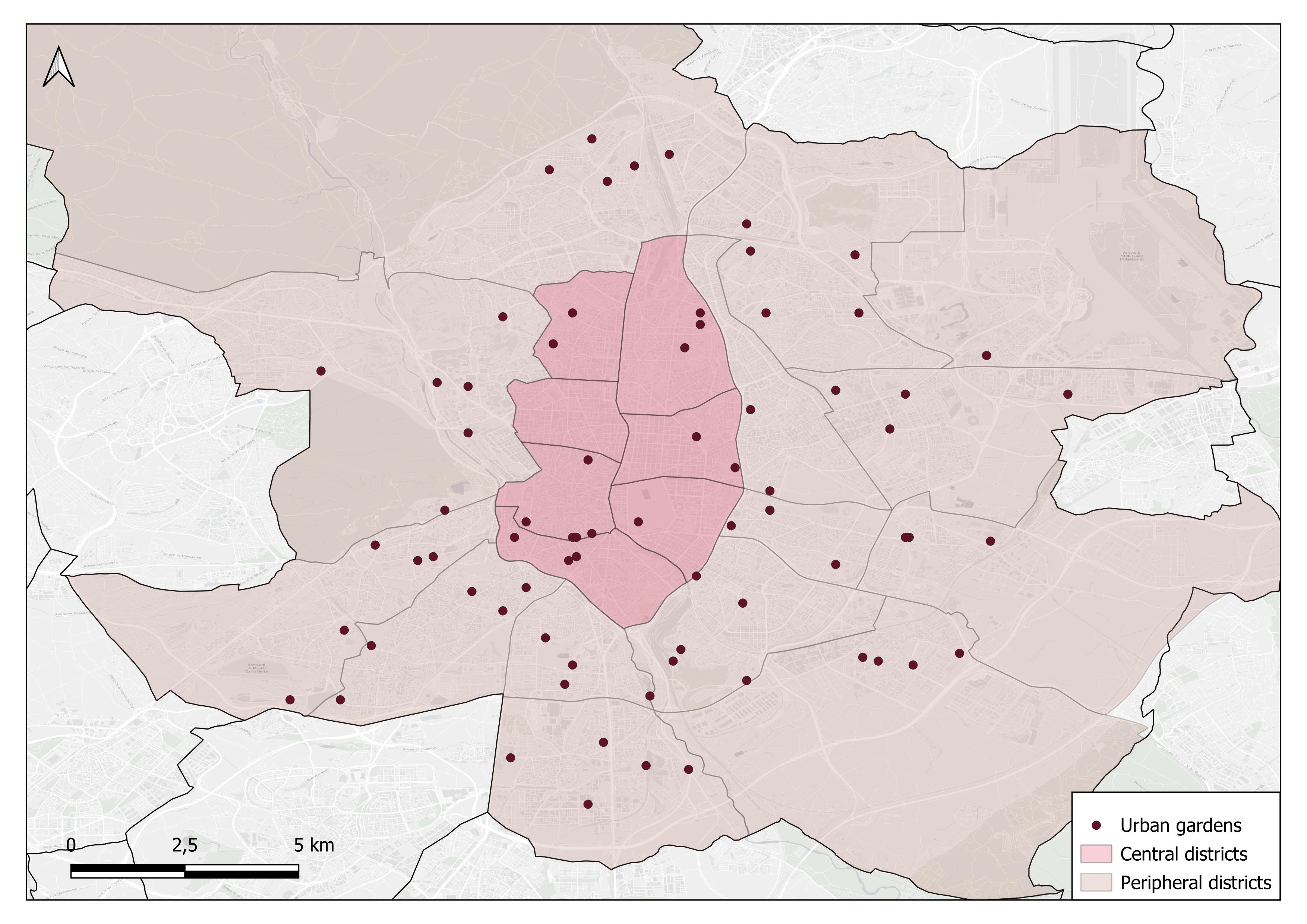 © Departamento de Geografía, Universidad Complutense de Madrid